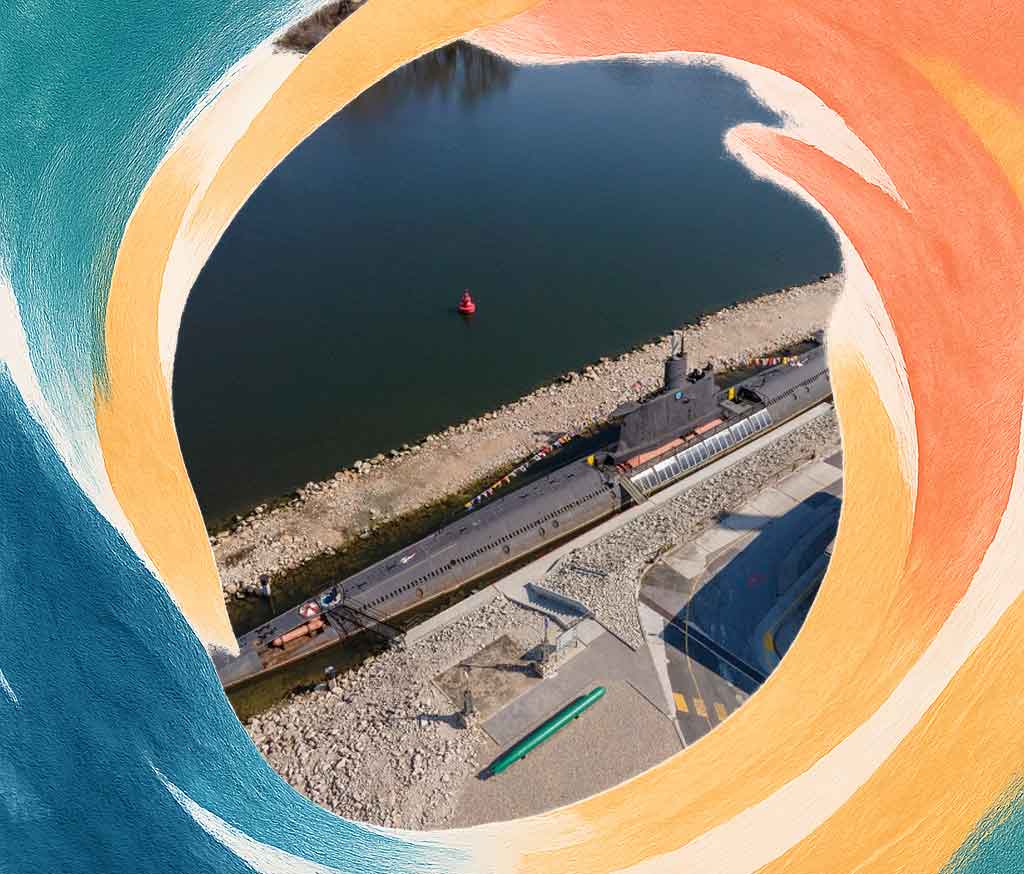
Just a short drive from the bustling beaches and cafés of Varna lies a tourist experience that defies the typical holiday checklist. In the quiet town of Beloslav, where Lake Varna meets the horizon in shimmering blues and greens, you’ll find an unlikely but utterly compelling destination: the last Bulgarian submarine, Slava (translated to Glory), now transformed into a submarine museum unlike any other. The Slava Submarine Museum is one of the most unusual things to do near Varna and Bulgaria’s only submarine museum open to the public.
Anchored at the humble pier in Beloslav. Walking through the Slava Submarine Museum in Beloslav feels like stepping into a Cold War time capsule. This submarine is a chance to walk through time, into the steel belly of a vessel once shrouded in military secrecy. For decades, this 76-meter-long submarine cruised beneath the waves of the Black Sea, carrying a 60-member crew through silent patrols and international naval exercises.
Today, she rests in peaceful retirement, thanks not to a government decree, but to the tireless dedication of private citizens determined to save her from the scrapyard. And that makes this place a unique museum that you can visit on a day trip from Varna!

TL;DR – Why Visit the Submarine Museum Near Varna?
- Bulgaria’s last Cold War submarine
- Fully restored interior you can walk through
- Torpedo bays, control room & periscopes
- Unique industrial-military tourism experience
- Perfect Varna day trip
- Glass Museum in Beloslav nearby
- History of the Slava Submarine (Romeo Class)
- Inside the Steel Giant – the Submarine Museum in Beloslav
- A Community Effort with Heart
- Quick Facts about the Museum Submarine
- How to Visit the Slava Submarine Museum from Varna
- Best Time to Visit
- FAQ About Visiting the Slava Submarine Museum
- Useful Links
- Why Visit This Cold War Submarine in Bulgaria
History of the Slava Submarine (Romeo Class)
Slava’s journey from weapon of war to museum marvel is itself an adventure. Built in the Soviet Union in 1959, she was originally designated as S-36 and served first in the Soviet Navy. Its original name was “Leninsky Komsomol”, reflecting the spirit of the era. In 1985, as Cold War tensions slowly eased, she was transferred to Bulgaria and became the fourth and final submarine of her class to serve under the Bulgarian flag. In 1991, she received her final name, Slava, meaning “Glory”.
She went on to participate in numerous naval missions, including high-profile NATO exercises such as “Cooperative Partner” and “Breeze”, where Bulgarian crews trained alongside international allies. Her Cold War career, especially a rumored involvement in the 1962 Cuban Missile Crisis under the Soviet banner, adds another layer of intrigue to the vessel’s mystique.
But by 2011, Bulgaria’s last operational submarine was decommissioned. With no fleet left, the country’s underwater defense history risked fading into memory… until one man intervened. Dancho Kalchev, owner of a nearby glass factory and founder of the Beloslav Glass Foundation, couldn’t let that happen. In 2018, he and a coalition of submarine veterans, private companies, and passionate volunteers launched an ambitious rescue mission. The goal was to preserve Slava not only as a static exhibit but as a living testament to Bulgaria’s naval heritage.
Inside the Steel Giant – the Submarine Museum in Beloslav
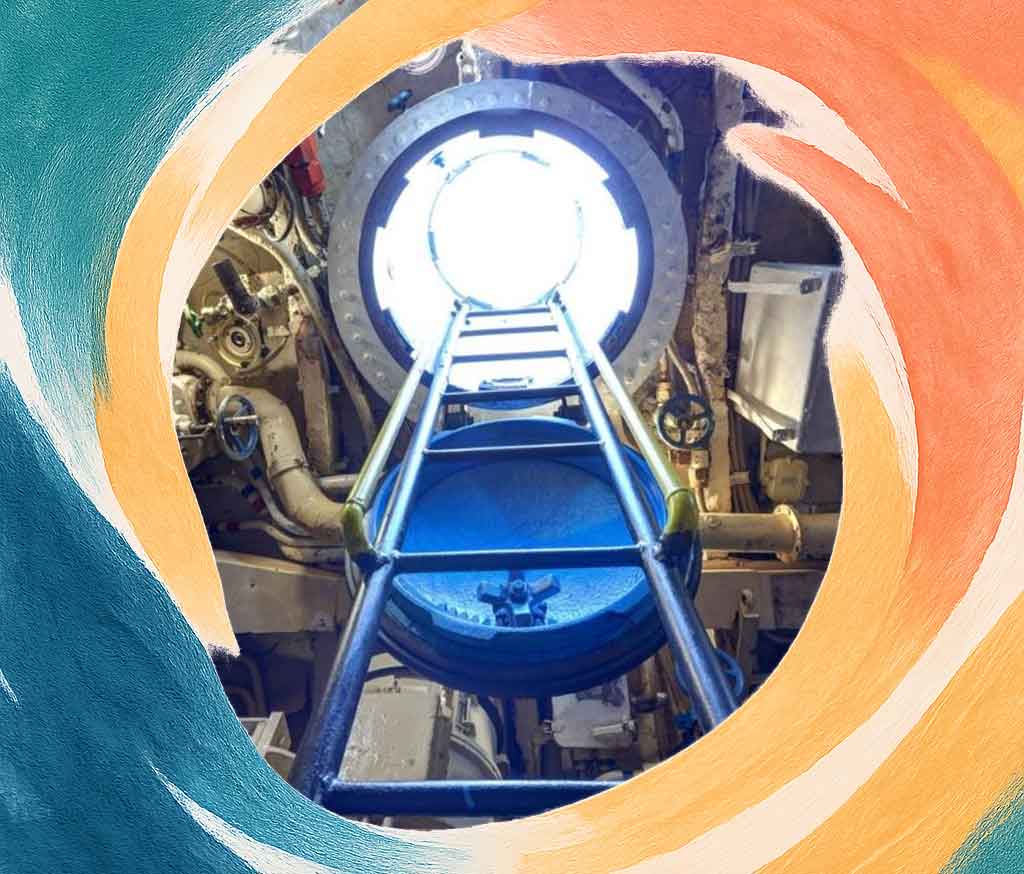
Walking through Slava submarine museum is an immersive, almost cinematic experience, only everything is real. From the torpedo compartments to the command center, every lever, bunk, and dial tells a story of precision, pressure, and patriotism. In this Cold War museum, people can see the reality of military life underwater: 20 days without sunlight, 60 men in tight quarters, where even the smallest error could mean disaster.
Tour groups wind their way through the submarine’s narrow steel corridors, ducking through bulkhead doors and marveling at the compact efficiency of submarine life. You’ll pass the bunks where sailors slept in rotating 8-hour shifts, the spartan galley where 180 meals were cooked daily in cramped conditions, and the mysterious code room where classified messages were sent and received.
Don’t miss the torpedo bays. Six massive launch tubes loom in the shadows, along with racks of dormant torpedoes. It’s a haunting reminder of the vessel’s original purpose: to destroy enemy ships before they ever reached Bulgarian shores. You can actually see an original torpedo there. It has been placed in front of the Slava submarine museum. It weighs about two tons and could hit a target at a distance of 6 kilometres. When sailing, the submarine could carry 14 torpedoes.
And yet, there’s a surprising warmth here too. Volunteers have restored much of Slava’s interior, down to the polished brass dials, vintage communication gear, and even working periscopes. Visitors get to witness not just military might, but the camaraderie and sacrifice of the men who served aboard her.
A Community Effort with Heart
What sets Slava apart from traditional military museums is its origin story. This was not a state-funded restoration. It was born of love for history, for national identity, and for the people who wore navy blue uniforms in service of Bulgaria.
The restoration took place over the course of nearly two years, with former submariners, Naval Academy cadets, local craftsmen, and private sponsors all pitching in. Donations came in the form of money, materials, and labor. Retired crew members returned to their former vessel to help scrub rust, reinstall fixtures, and share their stories.
By the time the museum officially opened on August 18, 2020, fittingly, the Day of Bulgarian Submariners, Slava had transformed into an emotionally charged submarine museum. And the restoration continues today, with new compartments being reopened and more artifacts being added regularly.
Quick Facts about the Museum Submarine
- Model: It is a Soviet Project 633 submarine, known in NATO as the Romeo class.
- Length: 76 m
- Width: 7 m
- Maximum depth: 300 m
- Speed: 15 knots
- Names: It was initially named “Leninski Komsomol” and was renamed “Slava” in 1991.
- First Commander under the Bulgarian flag: Captain Lieutenant Darin Mateev.
- Notable Service: In 1989, it was declared the “leading submarine of the Navy”. It also participated in joint NATO exercises following Bulgaria’s accession.
- Origin: It was built in the Soviet Union in 1959.
- Commissioned into the Bulgarian Navy: December 1985.
- Decommissioned: November 2011.
- Conversion to a Museum:
- In 2019, it was relocated to the port of Beloslav.
- It has been open to the public as a museum since August 2020.
How to Visit the Slava Submarine Museum from Varna
The Bulgarian navy submarine museum is located in Beloslav, only 15 km from Varna. The submarine museum is a popular day trip from Varna for travelers interested in military history and unusual attractions in Bulgaria. There are regular buses from Varna Bus Station. Alternatively, you can catch a bus to Devnya (route No. 14), which also stops at Beloslav. Last but not least, there are trains that run from the Central Train Station in Varna to Beloslav.
A helpful tip: The bus and train stop is called ‘Beloslav Center‘. If you see it written in Cyrillic on signs or schedules, it will look like this: Белослав Център.
A key detail for public transport users is that the bus and the train stops are on the northern side of Beloslav, while the submarine museum is on the southern side. This requires a short ride on the Belferi – the ferryboat in Beloslav that will take you to your final destination, the Submarine Museum.
Driving offers more flexibility for those looking for unusual things to do in Varna and the region. You can take the quicker northern road or opt for the slower, more picturesque southern route, which passes over the famous Asparuhovo Bridge and through charming villages along the lake.
Best Time to Visit
Conveniently located just 20 minutes west of Varna, Beloslav is easily accessible by car or local transport. The town itself is a quiet retreat with its own charms, including the Beloslav Glass Museum, which showcases the town’s rich tradition of glassmaking and artistry. The proximity of the two museums makes for a compelling cultural double bill: one celebrating creativity, the other courage.
You can go by yourself or book a trip.
Tours of Slava run from Wednesday through Sunday, at hourly intervals from 10:00 AM to 3:00 PM. Each visit includes a guided walkthrough and plenty of time to explore at your own pace.
Pre-booking is not equired. Unfortunately, you cannot book in advance to secure your spot. However, in general, it is unlikely that you will have to wait for hours.
FAQ About Visiting the Slava Submarine Museum
Yes, it is perfectly safe. This is a decommissioned submarine, now operating as a museum. It is not functional and does not submerge. However, as with any such environment, you should be cautious as there may be sharp metal edges inside.
We recommend wearing comfortable, sturdy shoes and trousers. Please be aware that the ladders are quite steep and the hatches (or openings) are narrow.
Absolutely, children are often fascinated by the visit. While it can be interesting for very young children as well, parents will need to pay significant attention to ensure they do not hurt themselves on the ladders or in the tight spaces.
This authentic submarine museum is not suitable for people with serious mobility issues. Its original ans well preserved military design presents significant access challenges like steep ladders and narrow passages.
Useful Links
- Slava Submarine (official website)
- Slava Submarine (official Facebook page)
- Belferi – ferryboat in Beloslav (official website)
- Varna Bus Station (offical website, search for Белослав – Център – Beloslav Centre)
- Daily buses from Varna to Beloslav
- Intercity bus line No. 14 from Varna to Devnya (stop in Beloslav)
- Train from Varna Central Station to Beloslav (Bulgarian Railways, official page)
Why Visit This Cold War Submarine in Bulgaria
In a world overflowing with glossy tourist attractions and photo-op destinations, the submarine Slava stands apart. It offers substance. This is a place for thoughtful travelers, for curious minds, for anyone who wants to understand what it meant to serve underwater, to face fear in silence, and to emerge with pride in the Cold War era. It is also for those who are looking for unusual things to do near Varna and want to experience some Cold War vibes. If you’re looking for unique things to do near Varna, the Slava Submarine Museum is one of the region’s most memorable experiences.
There’s something deeply human about this cold steel behemoth and its restoration, which one can enjoy today. Yes, it’s a war machine and a space of memory of hard work, discipline, and national service. And these people are preserving that memory not as a relic, but as a living, breathing experience.
So next time you’re lounging on Varna’s golden sands, consider making a detour, just 20 minutes inland to a spot that is also on the shore, for a very different kind of thrill. Because sometimes, the most unforgettable experiences happen not above the waves, but far beneath them.
Enjoy a day trip from Varna by visiting this unusual submarine museum and other curious attractions in Beloslav.